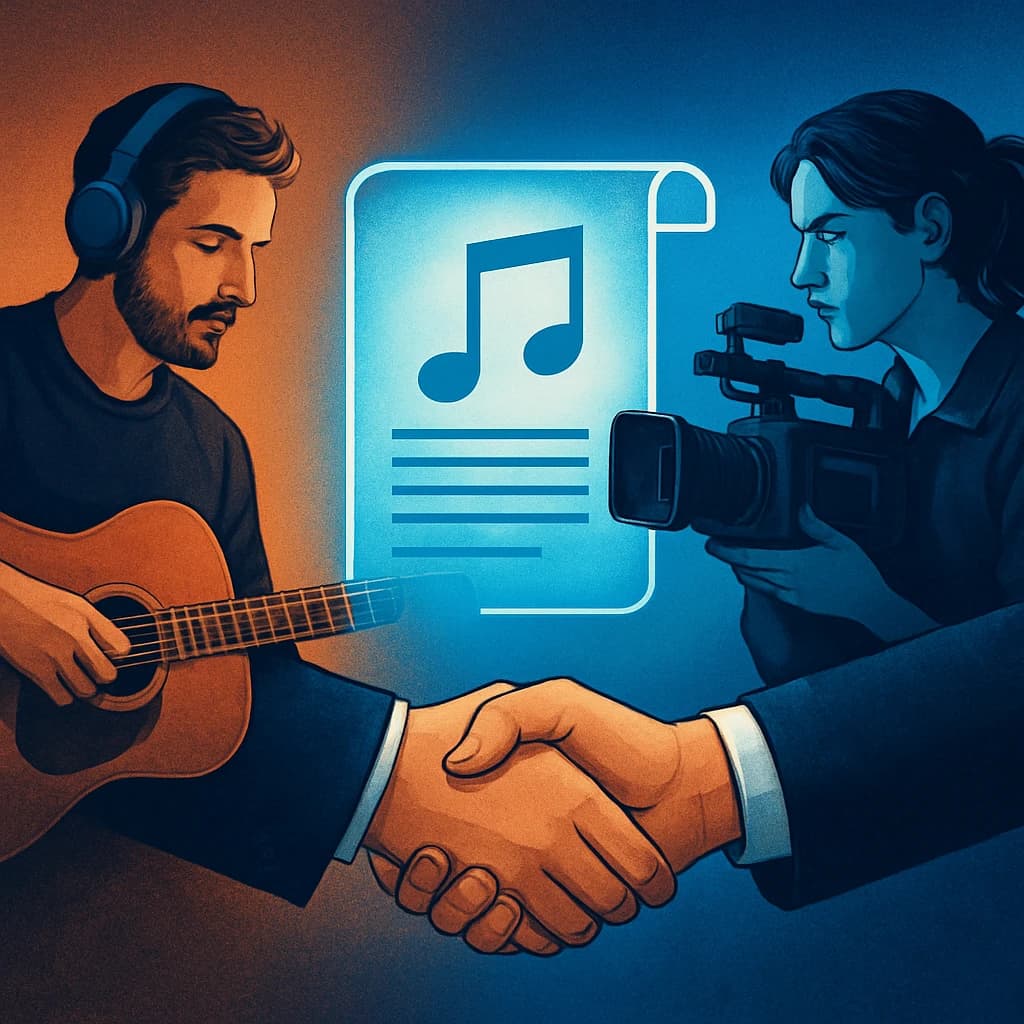
Music Copyright Registration: Answers to the Most Common Questions

This music copyright registration FAQ answers the high‑intent questions independent musicians, songwriters, producers, and small labels have about registering songs and masters. Expect direct, practical answers on which application to use for compositions versus sound recordings, how to handle co‑writes, samples and remixes, timelines and fees, and what registration actually buys you for enforcement. Each answer points to U.S. Copyright Office guidance and relevant UniteSync resources so you can act, not just learn.
Basics of Registration and Why It Matters
Direct answer: Copyright exists the moment your song or recording is fixed, but registration is the tool that turns ownership into enforceable power in the United States. This is the core point behind a practical music copyright registration FAQ — registration does not create your rights, it unlocks remedies and credibility.
What registration actually gives you
Top legal benefits: A valid registration is required to file an infringement lawsuit in U.S. courts and, if timely, it makes you eligible for statutory damages and attorney fee awards. Registration also creates a public record that courts, platforms, and collecting societies treat as authoritative evidence of ownership. See U.S. Copyright Office registration overview.
- Ability to sue: File a claim in federal court only with registration on record.
- Statutory damages and fees: Available when registration occurs before infringement or within three months of publication.
- Deterrence and leverage: Registrations make takedown notices and licensing demands faster and more credible.
- Evidence trail: Deposit copies and application metadata are proof you created or owned a work at a given time.
- Supports collection and international claims: A U.S. registration helps when platforms or foreign payers ask for paperwork.
Practical tradeoff: Registration costs time and a fee and may publish a deposit copy of your work. For many independent creators the cost is worth it when you plan to commercially release music or expect exploitation by others; for private demos you might delay. Online registration is cheap and fast relative to the value of preserving statutory remedies, so delaying to save a small fee is usually a false economy.
Concrete example: You and a co writer finish a single and plan a wide release. Register the composition and the sound recording before you distribute to streaming services. If someone rips the track and monetizes it, an early registration preserves your right to seek statutory damages and attorneys fees if you need to sue, instead of being limited to actual lost earnings.
Common misunderstanding: Many creators assume a platform takedown is the same as legal protection. It is not. Takedowns remove content quickly but do not create legal remedies. Registration is what lets you escalate beyond takedown notices to settlement leverage or litigation.
If you plan to release commercially, register before or at release. That action preserves remedies and makes future enforcement far less costly and more certain.
Which Application to Use: Musical Work or Sound Recording
Pick the application that matches the right you actually own. Use the Musical Work (PA) application for the underlying composition - melody, lyrics, chord changes. Use the Sound Recording (SR) application for the recorded master - the actual performance and production captured on a file.
Why it matters in practice
Different rights, different earnings and remedies. Compositions generate mechanical and public performance money; sound recordings generate master royalties, digital performance payments, and platform takedown leverage. Registering one does not register the other, and registration timing affects what remedies you can seek in court.
- If you only wrote the song: register the Musical Work (PA) to collect songwriter royalties and to enforce composition rights.
- If you only own the master: register the Sound Recording (SR) to enforce the recording and to pursue statutory damages for master infringements.
- If you own both: file both PA and SR. They protect different revenue streams and are worth the extra fee despite the cost.
Practical trade-off. If budget or time is tight, prioritize the registration that matches the asset most likely to be copied without permission. For streamed singles where you control the master, the SR is often the immediate priority; for a song you wrote that others record, the PA matters first.
Edge cases and things people get wrong
Common mistake: assuming a single registration covers both composition and recording. It does not. Many disputes come from mismatched metadata or registering only one right and discovering later you need the other for enforcement or royalties.
Samples and remixes. You can submit an SR for a remix you made, but registration does not clear sampled material. If your recording includes a sample you do not own, you still risk third party claims even with a registration - registration is not a license.
Joint works and credits. On a PA application list all songwriters as authors. On an SR list the claimant who owns the master. The Copyright Office records names; it does not resolve split disputes. Keep a separate split or work-for-hire agreement as proof.
Deposit and file types differ. The Office accepts different deposit formats for PA versus SR applications. For details, check the U.S. Copyright Office guidance and follow the file requirements so your submission is accepted: U.S. Copyright Office registration overview.
Concrete example: You wrote the melody and lyrics but hired a producer who owns the master. You should file a PA for the composition under your name and the co-writer if applicable; the producer or label should file an SR for the master. If you later regain master rights, file the SR then - but register the PA first to protect songwriter remedies.
Next consideration: Decide who will be listed as claimant and gather the correct deposit files now - mismatched names or missing deposits are the most common causes of delay or rejection.
Step by Step: How to Register a Song or Sound Recording
Quick orientation: Use this step-by-step flow when you are ready to file an online application — it is the fastest, cheapest route for most creators in the U.S. and answers a common search intent in the music copyright registration FAQ category.
Step-by-step checklist
- Prepare metadata and files: Collect legal names for all authors, the claimant name, the exact publication date if any, ISRCs if you have them, a final mix for masters, and a lyric file or score for the composition.
- Create an eCO account: Start at the U.S. Copyright Office registration overview and sign into the electronic Copyright Office (eCO). An account simplifies multiple filings and lets you track status.
- Choose the correct application: Pick the musical work application for the composition and the sound recording application for the master. If you own both, file both applications.
- Fill authorship and claimant fields carefully: Use legal names for authors; add stage names in parentheses in the author field if you want. For joint works list every coauthor. The claimant is whoever owns the rights now.
- Provide publication and distribution details: Enter the first publication date and country if released. If unpublished, mark it unpublished and use the creation year.
- Upload the deposit: For compositions upload a PDF of lyrics or score. For sound recordings upload a high-quality WAV or MP3. Name files clearly and upload the final master, not a short preview.
- Pay fee and submit: Pay through eCO and submit. You will get an email confirmation and a tracking number. Save that and your deposit files in multiple places.
- Monitor and respond to Office requests: Check your eCO account for correspondence. Most delays come from mismatched metadata or missing deposit files.
Practical tip: The Copyright Office accepts common digital formats but quality matters. Upload a WAV if you can - it reduces back-and-forth and potential refusal for poor-quality deposits. See the Office guidance and circulars at U.S. Copyright Office circulars.
Trade-off to consider: Group registrations save money and time when you have many similar works, but they make individual ownership details less visible. If splits or future licensing disputes are likely, register critical tracks individually to keep the record granular.
Concrete example: You co-wrote a song with another writer and produced the master yourself. File a musical work application listing both authors with legal names and upload a PDF of lyrics. Then file a separate sound recording application naming the claimant that owns the master and upload the final WAV. Keep your signed split agreement in case ownership percentages are disputed later.
Important: the Copyright Office records names and dates but does not enforce split percentages. Always keep a signed split sheet or contract outside your registration.
Common mistakes that slow things down: Wrong publication date, using a stage name only, uploading an edit or snippet instead of the final work, and choosing the wrong application type. Fixing these after filing adds weeks to processing.
Final judgment: Filing online is routine if you prepare files and metadata in advance. Be precise about names and deposits — that accuracy is what shortens processing and preserves your ability to enforce rights later. For complex ownership or sample clearance questions consult counsel or use resources like SoundExchange for recording-rights context.
Joint Authorship, Splits, Samples, Covers and Remixes
Straight to it: collaborations, samples, covers and remixes are where registration metadata and legal reality collide — and where creators most often lose control or money because paperwork was sloppy.
Joint authorship and splits
Short answer: list every author on the application and keep a signed split agreement outside the Copyright Office. The Office records names and dates but does not police or record percentage splits, so the single document that resolves ownership disputes is your private split agreement.
Practical trade-off: a single joint registration is cheaper and gives one clear effective date for everyone, but if contributors disagree later the registration only proves creation date and authorship names — not who gets what money. If you expect complicated splits or future transfers, register early but also file separate assignments or agreements when ownership changes.
- Do this: name all contributors as authors and put claimants (owners) correctly — songwriter names for the composition, label or performer for the master.
- Do not assume: the Copyright Office will enforce your split percentages — it will not.
- Document: keep a signed split sheet or a written agreement and attach it to your internal release folder; consider uploading agreements to a trusted third-party registry or your distribution partner.
Samples, remixes and derivative works
Short answer: you can register a recording or a composition that includes a sample, but registration does not clear rights. If your work uses someone else's recording or composition, you need permission; otherwise you risk takedowns and infringement claims even after registration.
Real-world limitation: platforms and courts treat remixes and sampled works as derivative — registration creates a timestamped record that helps enforcement for the parts you own, but it does not protect you from claims by the sampled rights holders. If you cleared a sample, make a note of the license reference in your records and link it to your registration metadata when possible.
Example use case: you and a producer create a remix that uses a 5-second guitar loop from another artist. You can register the new sound recording as your master and name your contributors, but you must also secure a license for the guitar loop. If you do not clear it, expect takedowns and possible claims — your registration will not stop that.
Covers and arrangements
Short answer: you may register an arrangement or new performance of someone else’s song only to the extent of your original contribution — you cannot claim ownership of the underlying composition. For released covers, obtain a mechanical license or use a licensing service to avoid infringement.
Actionable detail: when registering a cover, list yourself as author of the sound recording and identify the original composer(s) in the relevant fields; add a short note in the registration description that the recording is a cover to prevent confusion during rights clearance or platform disputes. For distribution, use a compulsory mechanical license process or a service that handles mechanicals for you.
One firm judgment: in practice the most costly mistake is poor metadata and no written split. You'll get the registration date, but without clear, contemporaneous agreements you will lose time, money, and leverage in negotiations or royalty collection. Fix metadata and paperwork before release, not after.
For help choosing the right registration path or documenting splits, see Copyright Registration UniteSync and the U.S. Copyright Office registration overview.
Next consideration: if ownership is contested or you plan to monetize through sync or third-party licensing, get a written agreement and consider legal review before you upload or distribute — registration is necessary but not sufficient for clean, collectible rights.
Timeline, Costs, and What to Expect After Filing
Expect a wait. Filing an application online takes minutes; getting a registration certificate usually takes months. This is a common point in the music copyright registration FAQ creators miss: submission is quick, acceptance and issuance are the slow parts.
What happens after you hit submit
- Confirmation: you get an email with your application number — keep it, it is your thread for follow ups.
- Initial review: an examiner checks basic metadata and the deposit; expect requests for corrections if names, dates, or deposit files are wrong.
- Deposit processing: copies you uploaded become part of the public record if accepted — sometimes the Office asks for different formats.
- Final decision: once accepted you receive a certificate and registration number; the public catalog updates later.
Typical timelines and common delays. For online applications the real-world average is several months; busy periods, incomplete metadata, and deposit rejections push that to the longer end. If your application triggers an examiner query you can add weeks or months depending on how fast you respond.
| Stage | Realistic timing | What causes delays |
|---|---|---|
| Email confirmation | Within minutes to 24 hours | Rarely delayed |
| Initial examiner review | 2–12 weeks | Incorrect author/claimant names, wrong filing type |
| Requests for additional info | 2–8 weeks to resolve (depends on reply speed) | Missing deposit, format problems, inconsistent publication date |
| Final certificate issuance | A few weeks after acceptance to several months | Backlog, special handling needed, complex ownership issues |
Cost considerations and tradeoffs. There are multiple fees: separate filings for the composition and the sound recording, optional special handling for urgent needs, and group registration options that can lower per-track cost for batches. Budget for multiple fees if you own both songwriting and master rights — that doubles filing costs for the same track.
- Typical creator range: many creators pay between low tens to low hundreds of dollars per application depending on type and group options; check the latest fees at the U.S. Copyright Office registration overview.
- Special handling: available for urgent litigation or customs actions but it costs more and requires justification — use it only when timing is critical.
- Group registrations: save money if you have many similar works, but they have stricter eligibility rules and can complicate individual enforcement.
Practical insight. If you plan to release a single on streaming platforms, budget to register the composition and the master separately before release if you want the strongest enforcement options later. If money is tight, prioritize the registration that protects the right you actually control and will need to enforce.
Concrete example: You and a producer finish a single and you own the composition while the producer owns the master. You submit two online applications the same day — one for the musical work and one for the sound recording — and pay two fees. Expect separate processing timelines and be prepared to receive two different registration numbers; attach those numbers to metadata and digital distributor records when they arrive.
Most delays are avoidable. Accurate metadata and correct deposit formats cut weeks from processing time.
Next consideration: after filing, put the registration number into your distributor and publisher metadata, archive your deposit files, and set reminders to check the public catalog — those small actions make enforcement and royalty collection much cleaner when you need them.
Enforcement Options After Registration
If you registered your work, you have more than one path to stop unauthorized uses and recover money. Registration opens practical routes—platform takedowns, licensing demands, collection through rights organizations, and litigation—but each route has different costs, speed, and outcomes.
Immediate steps you should take
Gather evidence now. Save timestamps, URLs, screenshots, and download copies of the infringing file and metadata. That evidence is the difference between a fast takedown and a stalled dispute.
- DMCA takedown: Send a notice to the platform where the content appears. This is cheap and fast but temporary; the uploader can submit a counter notice and the content may go back up.
- Platform claims and metadata strikes: Use built in tools like YouTube Content ID or distributor dispute processes when available. These can monetize or block uses without immediate litigation.
- Direct licensing demand: Contact the uploader or their label with a license offer and a deadline. This often works where the infringer is a small creator or a brand awkwardly using your track.
- Escalate to collection or rights bodies: If the infringement involves public performance or digital streaming, register with or contact a collecting organization; see SoundExchange for sound recording digital performance avenues.
Practical tradeoff: DMCA is low cost and fast but offers limited long term protection. Negotiation gives cash quickly if the infringer cooperates. Litigation can deliver statutory damages and an injunction but is expensive and slow.
When litigation makes sense
Use litigation only when the expected recovery justifies the cost. A successful lawsuit can stop uses nationwide and yield statutory damages and attorney fees, but you should confirm your registration timing first because it affects remedies. See the U.S. Copyright Office registration overview.
Limitation and judgment: Most creators are better off exhausting platform remedies and direct licensing before suing. Litigation is worth it when an infringer is commercial, refuses to negotiate, or the infringement is scaled and ongoing.
Concrete Example: You find your newly released song used in an ad campaign for a small ecommerce brand. Because you registered the composition and the recording before the ad ran, you file a DMCA takedown and send a demand letter asking for a license fee based on ad spend. The brand removes the ad and agrees to a settlement. If they refused, you would consider counsel because the campaign amplified the harm and produced measurable revenue.
Statutory damages and attorney fees are powerful but depend on when you registered. Timely registration increases leverage.
Next practical step: If you need help compiling evidence, filing platform notices, or evaluating a demand strategy, see our guide on Copyright Registration – UniteSync or consult a lawyer for complex disputes.
International Protection and Practical Cross Border Considerations
Start here: the money your music earns overseas often sits in systems you do not control. In this music copyright registration FAQ section, understand that a U S registration is useful documentation but it does not magically create enforcement rights in every country. International protection depends on treaties and local rules, and enforcement always happens country by country. See the U S Copyright Office for baseline rules U S Copyright Office registration overview.
How cross border protection actually works
Key point: most countries follow the Berne Convention principle of national treatment so your work gets basic copyright protection abroad without a separate local registration. That does not mean identical remedies or enforcement procedures. Some nations have additional neighboring or related rights, different proof requirements, or separate regimes for mechanical and performance royalties.
- National enforcement: you must sue or enforce in the country where the infringement occurs unless the defendant has assets elsewhere.
- Evidence value: a U S registration or official certificate is strong evidence but not a substitute for local filings when local law requires registration or deposit for certain remedies.
- Rights that vary: neighboring rights, collective management rules, and statutory damages differ by jurisdiction and affect recovery potential.
Practical steps for creators distributing internationally
Do these first: register your composition and master with the U S Copyright Office, make sure your metadata includes correct writer splits and publisher info, and register with your performing rights organization and with SoundExchange. Then use an admin or publishing service to push accurate metadata and registrations to foreign collection societies so you actually collect royalties.
- Register in the U S as primary documentation and keep deposit copies handy for platform disputes.
- Give a publisher or admin the right to collect and pursue foreign royalties, or sign up with a global service like UniteSync to reach 117+ countries.
- Register ISWC/ISRC and confirm your distributor submits those codes and correct splits to DSPs and CMOs.
- Enroll with foreign CMOs via your admin or publisher when passive income justifies the cost of local registration or representation.
Trade off to accept: registering in multiple countries yourself is expensive and rarely efficient for most independents. In practice, centralized registration, clean metadata, and a reliable global administrator recover more money than piecemeal national filings.
Concrete Example: a U S songwriter spots an unlicensed sync on a German streaming service. First, use your U S registration and distributor records to submit a takedown or claim to the platform. Next, have your admin contact GEMA or the platform with proof of ownership and metadata. If the revenue at stake is small you will likely recover money through platform channels; if the use is commercial and valuable, consider local counsel or arbitration.
Judgment: many creators chase local registrations because they think that equals faster pay. In practice the mismatch is administrative not legal. Clean metadata, proper splits, ISRCs and a good global admin deliver 80 percent of recoverable foreign royalties; direct foreign litigation is reserved for high value disputes.
Next consideration: review your metadata, confirm ISRC and ISWC codes are registered, and decide whether to add a publishing administrator. If you want a practical path to collect internationally start with UniteSync copyright registration and the U S Copyright Office guide.
How UniteSync Can Help and Recommended Next Steps
You likely already have tracks online and want the money and legal options that come with proper registration. This section of the music copyright registration FAQ explains what UniteSync actually does to reduce paperwork, improve metadata accuracy, and connect registration to real-world royalty collection across 117+ countries.
What UniteSync does well. UniteSync pulls three tasks most creators struggle with into one workflow: metadata validation (the information attached to your song, like who wrote it and who owns it), guided submission or assisted filing for registration, and rights collection so earnings actually find you. That combination matters because sloppy metadata is the reason money gets lost more often than any single legal mistake.
Practical limitations and tradeoffs
Be realistic about scope. UniteSync helps you prepare accurate registrations and funnels claims and collections, but it is not a law firm and cannot resolve complex ownership litigation for you. If ownership is disputed, budget for legal advice; UniteSync can hold evidence, export registration data, and support a case, but it will not replace counsel in court.
Tradeoff: speed versus control. Using a platform to automate registrations gets you done faster and reduces metadata errors, but you give another party structured access to submission details. If you want absolute manual control over every field, DIY at the U.S. Copyright Office is still an option — it just increases the chance of mistakes that delay processing.
Concrete example
Concrete Example: A producer who co-wrote and self-released a single used UniteSync to standardize splits, upload the composition and master deposit files, and start a registration request. UniteSync validated metadata, submitted the application pathway, and then routed the recording into collection channels so performance and mechanical royalties could be tracked. The artist still consulted an attorney when a sample clearance question came up; UniteSync managed the documents and payouts while the legal issue was handled separately.
- Step 1 — Pick one clear application path. Decide whether you need a musical work, a sound recording, or both and start there. Use Copyright Registration – UniteSync for guided choices.
- Step 2 — Gather accurate files and metadata. Have final audio masters, lyrics, ISRCs if available, and a splits agreement. UniteSync flags common errors that delay the U.S. Copyright Office application found at U.S. Copyright Office registration overview.
- Step 3 — Register before major licensing events. If you plan sync licensing or wide distribution, register early to preserve enforcement remedies; if there are sample or coauthor issues, resolve those first.
- Step 4 — Connect collection and monitoring. After registration, link your work to UniteSync royalty administration to surface foreign earnings and register with performance collectors like SoundExchange where appropriate.
- Step 5 — Escalate when ownership is contested. If splits or samples are disputed, get counsel. UniteSync will supply certified copies, deposit files, and metadata exports to your attorney.
If you want fewer lost royalties, fix the metadata first. Registration matters, but metadata and ongoing collection are where earnings actually get recovered.
AUTHOR

Charly
Carlos Palop is a seasoned music publishing expert, adept in rights management and royalty distribution, ensuring artists' works are protected and profitably managed. Their strategic expertise and commitment to fair practices have made them a trusted figure in the industry.